Longevity figures in this guide are realistic ranges. Individual results vary and should be treated as a guide, not a guarantee.
The honest answer to how long fillers last is: it depends on where they are placed. Dermal fillers do not hold for the same length of time in every area of the face. Broadly, most hyaluronic acid fillers last somewhere between six months and two years, but the treatment area makes an enormous difference to where in that range your results will sit.
Lip fillers break down relatively quickly because the lips are in constant motion throughout the day. Cheek fillers, placed deeper in a far less mobile area, can last considerably longer. Tear trough results tend to sit in the middle. Jawline and chin fillers can rival cheeks for longevity. And individual factors, from your metabolism to your sun exposure habits, push results up or down within those ranges.
This guide gives you the realistic longevity picture for each treatment area, explains what drives the differences, and covers what you can actually do to get more from your results. The numbers below are honest ranges based on clinical experience, not guarantees.
What Affects How Long Fillers Last?
Before looking at specific areas, it helps to understand the main variables that determine how long your filler results hold. Four things matter most:
Treatment area and facial movement
Areas with more movement break filler down faster. The lips move when you talk, eat, drink and smile, hundreds of times a day. That constant mechanical stress on the gel accelerates the breakdown of the hyaluronic acid. The cheeks, by contrast, are relatively still, which is a major reason cheek filler typically outlasts lip filler by a significant margin.
Product type and formulation
Not all hyaluronic acid fillers are the same. Different products have different cross-linking structures, which affect how firm they are, how deeply they can be placed, and how long they last. Thicker, more structural products designed for deep placement in cheeks or along the jawline typically last longer than the softer formulations used for lips or the delicate tear trough area. At Facial Aesthetics Centre, we use Teoxane and Juvederm, both extensively researched with well-established longevity profiles.
Volume used
A larger volume of filler in any given area means more material for the body to break down, which generally translates to a longer period before results look significantly different. For structural areas like the cheeks or jawline, where volume is placed conservatively but with purpose, the result often holds well for an extended period before a top-up is needed.
Individual metabolism and lifestyle
Your body breaks down hyaluronic acid naturally over time, because HA is a substance it already produces and is designed to metabolise. How quickly this happens varies between individuals. People with faster metabolisms, sometimes including those who exercise very intensively, can find filler breaks down a little faster. Smoking, significant sun exposure, poor hydration and lack of SPF all accelerate the process.
How Long Do Fillers Last by Treatment Area?
Lip Fillers: 6 to 12 Months
Lip fillers typically last between six and twelve months, with most patients finding results hold well for around eight to ten months before a top-up feels worthwhile. The lips are the shortest-lasting filler site on the face because of the constant movement and the relatively soft, thin product formulations that the area requires.
First-time lip filler patients sometimes find results fade a little faster than with subsequent treatments, as the tissue builds familiarity with the product. Many patients settle into an annual or twice-yearly maintenance pattern over time.
If you are considering lip fillers, our dedicated lip fillers in Haywards Heath page covers everything you need to know before booking.
Cheek Fillers: 12 to 24 Months
Cheek fillers are among the longest-lasting of all filler treatments. Results typically hold for between twelve and twenty-four months. The cheek area is relatively static; the products placed there are denser and sit more deeply in the tissue, and the volumes used tend to be larger, all of which contribute to extended longevity.
Patients who have treatment for subtle enhancement or early volume restoration often find their results last toward the upper end of this range. Those having more significant structural work may notice the effect becomes less prominent a little sooner, though the result still fades gradually rather than disappearing at a fixed point.
Tear Trough Filler: 9 to 18 Months
Tear trough filler tends to last longer than lip filler but not as long as cheek filler for most patients. The under-eye area has relatively little movement compared to the lips, but the product used here is very fine in formulation to suit the delicacy of the skin in this area, which influences how long it persists in the tissue.
The precision of placement also matters. Well-placed tear trough filler, delivered with the right product and technique, tends to hold well toward the longer end of the range. The tear trough is a high-skill area, and the quality of the result and its longevity are closely connected to the clinician’s experience.
For full information on whether tear trough filler is right for you, including an honest section on what it can and cannot treat, see our tear trough filler in Haywards Heath page.
Jawline and Chin Fillers: 12 to 24 Months
Jawline and chin fillers use denser, structural products placed into areas with limited movement, and the results reflect this. Most patients enjoy results for between twelve and twenty-four months. The chin involves slightly less movement than the jawline, which means chin results can at times outlast jawline results slightly, though both are among the longer-lasting filler areas.
Jawline and chin treatment is often part of a broader facial balance approach, and many patients plan maintenance appointments every twelve to eighteen months to keep the result looking its best.
Nasolabial Folds and Marionette Lines: 9 to 18 Months
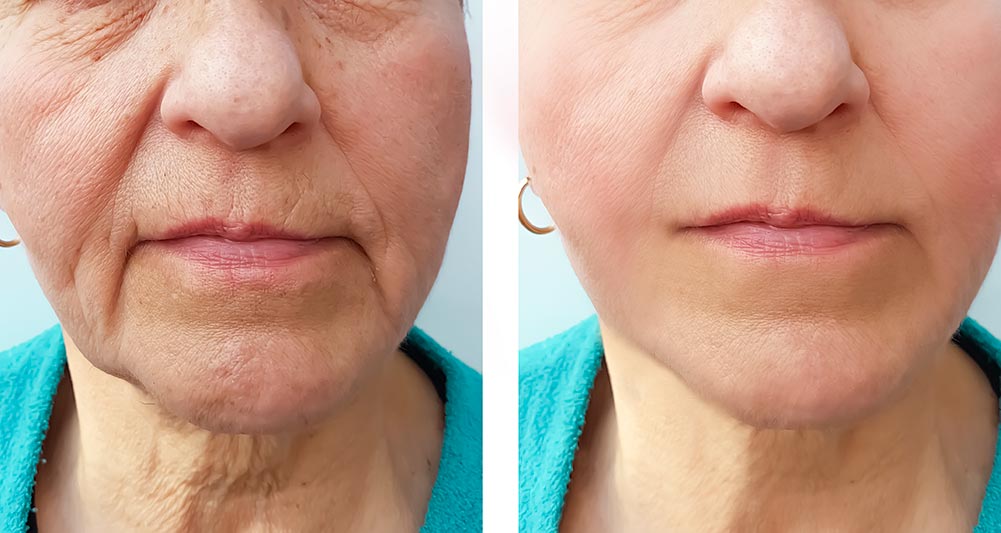
Filler used to soften the lines that run from the nose to the corners of the mouth (nasolabial folds) or from the mouth downward toward the chin (marionette lines) typically lasts between nine and eighteen months. These areas involve moderate facial movement, less than the lips but more than the cheeks, and longevity reflects that. Results in this area tend to fade gently and gradually, which many patients find easier to manage than a sharper endpoint.
Why Do Filler Results Fade Faster in Some Areas?
All hyaluronic acid fillers dissolve naturally over time because HA is a substance your body already produces and is continuously metabolising. The enzymes responsible for breaking down HA in your tissues, called hyaluronidases, work on the filler in the same way they work on the HA your body makes naturally. This process cannot be stopped, only influenced.
Movement accelerates the breakdown in high-activity areas. The repeated mechanical stress on the gel structure in the lips speeds up the enzymatic process, which is why frequent talkers and those with very expressive faces may find their lip results fade slightly faster than average. This is also why areas like the cheeks and chin, which are largely static, hold results so much longer.
The good news is that filler does not simply disappear on a specific day. Results fade progressively over months, meaning most patients notice a gradual softening of the effect rather than a sudden change. This makes it much easier to plan maintenance treatments in a way that keeps the result looking consistent.
How to Make Your Fillers Last Longer
You cannot prevent filler from eventually breaking down, but several habits and choices make a real difference to how long your results hold:
- Wear SPF daily: UV exposure degrades collagen and speeds up HA breakdown in the skin. Daily sun protection is the single most effective thing most people can do for the longevity of their filler results and the overall quality of their skin
- Stay well hydrated: hyaluronic acid is hydrophilic, meaning it attracts and binds water. Chronic dehydration affects the skin environment in which the filler sits and can contribute to faster breakdown
- Avoid excessive heat shortly after treatment: saunas, steam rooms and very hot environments in the two weeks after treatment can accelerate early breakdown. Give the filler time to settle before returning to these
- Keep up a good skincare routine: skin in good condition holds filler results better than compromised or poorly maintained skin. Products that support the skin barrier and collagen production, including retinoids and vitamin C serums when appropriate, contribute positively to the overall picture
- Top up before results fully disappear: maintaining a result before it has completely faded typically requires less product than rebuilding from scratch. Regular, moderate top-up appointments are more cost-effective and tend to look more natural than treating every few years
- Avoid smoking: smoking degrades collagen, reduces skin elasticity and accelerates HA breakdown. It is one of the most consistent predictors of shorter-lasting filler results across all treatment areas
Can Fillers Be Dissolved or Topped Up?
Yes, filler can be dissolved, but this is only carried out following a thorough consultation. Elective dissolving carries a meaningful level of risk and those considerations need to be discussed in full before any decision is made.
Where dissolving is appropriate, it is always preferable for the original treating practitioner to carry it out. They will know exactly where the product was placed, which product was used and how much was administered, which makes the process safer and more precise.
In the exceptionally rare circumstance that filler requires emergency dissolution, we have everything in place to manage that scenario.
Top-ups are straightforward for all the filler areas described above. Because results fade gradually, topping up while some filler remains rather than waiting until it has completely disappeared typically requires a smaller volume of product and produces a more natural, continuous result. Many patients develop a maintenance schedule over time that keeps their results looking consistent without over-treating.
If you have had filler elsewhere and are unsure what product was used, how much remains, or whether it is appropriate to treat on top of existing filler, we are happy to assess this at a free consultation before recommending any further treatment.
Is Filler Worth It for Longevity?
Whether filler represents good value is a question only you can answer, but some framing helps. When you consider the cost spread across the life of a treatment, longer-lasting areas like cheeks and jawline often compare favourably to other regular spending on appearance. Shorter-lasting areas like lips involve more frequent maintenance, which is worth factoring into your thinking before you book.
What most patients tell us matters more than the raw cost is what the results give them in daily life. Looking in the mirror and seeing a version of yourself that feels like you, rather than a version that looks altered or overdone, is the outcome that generates genuine satisfaction. The treatments that produce that result tend to be the ones patients return for.
For a full breakdown of our filler pricing, visit our treatment costs page. All consultations are free and carry no obligation. If you have questions about specific treatments that are not covered by this guide, our FAQ page covers the most common ones.
Summary: What to Expect by Treatment Area
To recap the realistic longevity picture across the main filler areas:
- Lip fillers: 6 to 12 months (individual results vary)
- Cheek fillers: 12 to 24 months (individual results vary)
- Tear trough filler: 9 to 18 months (individual results vary)
- Jawline and chin fillers: 12 to 24 months (individual results vary)
- Nasolabial folds and marionette lines: 9 to 18 months (individual results vary)
These ranges are shaped by treatment area, product choice, volume and individual factors including metabolism and lifestyle. The numbers give you a framework for planning; a consultation with a clinician who can assess you directly will give you a much more accurate picture of what to expect in your specific case.
The figures tell part of the story. The consultation fills in the rest.
At Facial Aesthetics Centre in Haywards Heath, all consultations are free and carry no obligation. Our clinicians will give you an honest assessment of what is achievable, set realistic expectations on longevity and cost, and recommend the right treatment if there is one, or tell you clearly if there is not. See our full range of dermal filler treatments or book directly below.