The Problem That Keeps You Up at Night
You wake up with your jaw clenched tight and a dull ache that sits behind your temples. A partner mentions they can hear grinding at night. Your dentist finds worn enamel, a cracked cusp or pressure marks on your tongue and tells you something you already suspect: you are grinding and clenching while you sleep, and possibly during the day too.
Teeth grinding and jaw clenching, known together as bruxism, are more common than most people realise. The symptoms range from mild jaw stiffness in the morning to persistent headaches, earache, tooth sensitivity and visible changes to the shape of the lower face over time. Many people manage for years without knowing what is causing the problem.
What is less well known is that there is a treatment option beyond the night guard, and it comes from a perhaps unexpected direction: the masseter muscle. As a dentally trained clinician, this is a subject I know well and one I discuss regularly with patients who come in for reasons that are as much about comfort as appearance.
What Causes Teeth Grinding and Jaw Clenching?
Bruxism rarely has a single cause. Most of the time it is a combination of factors working together:
- Stress and anxiety: the jaw is a place where many people hold tension. Grinding and clenching during sleep is often the body processing stress it has not released during the day
- Sleep disorders: bruxism is closely associated with disrupted sleep, including obstructive sleep apnoea. If you grind heavily at night, it is worth discussing your sleep quality with your GP
- Bite issues: when the upper and lower teeth do not meet evenly, the jaw can compensate in ways that lead to clenching patterns. This is something a dentist is well placed to assess
- Habit and concentration: many people clench during effort, driving, working at a screen or exercising, without realising they are doing it
- Certain medications: some antidepressants and stimulant medications are associated with bruxism as a side effect
The masseter is the large muscle on either side of the jaw that performs the work of chewing and clenching. In people who grind or clench heavily and repeatedly over time, this muscle can become overdeveloped and hypertrophic, making it visibly larger and the lower face squarer in shape. It can also become chronically tight, contributing to jaw ache, headaches and a constant sense of tension in the lower face.
The Usual First Steps
A dentist who spots the signs of bruxism will typically recommend a custom-fitted night guard: a hard or soft splint worn over the teeth during sleep to protect the enamel and absorb some of the grinding force. Night guards are an important protective measure and are often the right first step, particularly for patients with significant tooth wear.
Alongside a guard, dentists often recommend strategies to address the underlying drivers: stress management, reducing caffeine, improving sleep hygiene, physiotherapy for the jaw muscles and awareness techniques to reduce daytime clenching. For some patients, addressing the root cause reduces the bruxism significantly.
For others, the symptoms persist despite these measures. The night guard protects the teeth but does not reduce the clenching force itself, and the jaw ache, headaches and muscle tightness continue. This is often the point at which patients start looking for an additional option, and where a conversation about the masseter muscle becomes relevant.
How Muscle Relaxing Treatment Can Help
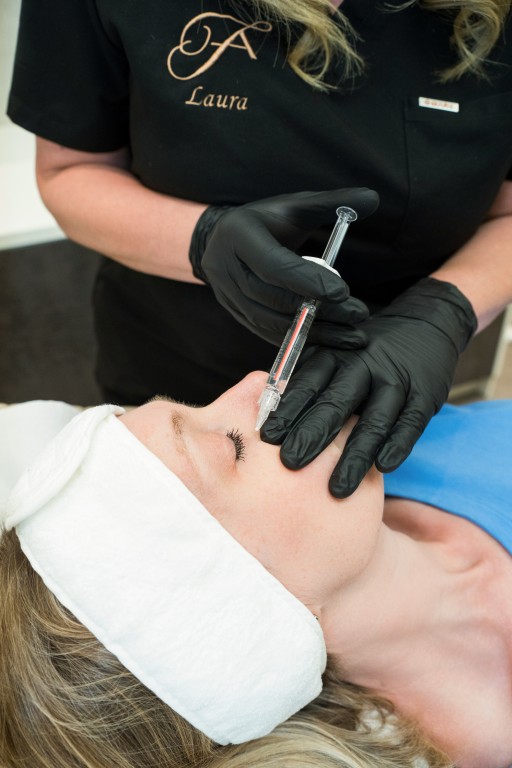
Muscle relaxing injections work by temporarily reducing the strength of the target muscle’s contraction. When used in the masseter, this reduces the force with which the jaw clamps shut during clenching and grinding episodes.
A weaker clenching force means less mechanical load on the teeth, which reduces the wear and pressure that bruxism causes over time. For patients with chronic jaw tension and associated discomfort, reducing the intensity of the muscle contraction can also ease that ongoing tightness. The treatment does not stop the grinding reflex or the habit itself, but it limits the force and therefore the damage.
This treatment is not a cure for bruxism. It addresses the muscular force, not the underlying cause. A consultation is the right starting point to discuss whether it is appropriate for your situation.
The effect is temporary. The muscle relaxing injection wears off gradually over several months, and patients who find it helpful typically have repeat treatments to maintain the benefit. There is no impact on the ability to chew, speak or yawn normally.
There is also an aesthetic dimension that is worth knowing about. In patients whose masseter muscles have become significantly enlarged through years of heavy clenching, the gradual relaxation of the muscle over a course of treatments can soften the square, widened appearance of the lower face that hypertrophic masseters produce. For some patients this is a welcome secondary effect; for others it is the primary reason they seek the treatment. The two outcomes are not always separable, and a consultation is where this is discussed properly.
For full details on masseter treatment, including what the appointment involves and what to expect, see the masseter treatment page.
Why Dental Training Makes a Difference Here
Most practitioners offering masseter treatment learn it as an aesthetic technique: assess the muscle, mark the injection points, treat. What my dental background adds is a different starting point. I understand the jaw from the inside, as a functional structure: the bite, the temporomandibular joint, the way the masseters work in relation to the other muscles of mastication, and what the teeth and surrounding tissue reveal about how long and how severely someone has been grinding.
That changes what a consultation looks like. Rather than assessing whether the muscle is suitable for treatment, I am asking a broader set of questions about what the grinding is doing, what the patient has already tried and whether there is anything in the dental picture that should be addressed first or alongside. Sometimes I recommend they discuss a specific dental issue with their own dentist before we proceed. Sometimes the conversation reveals that the problem is more postural or sleep-related than muscular.
Patients who have had muscle relaxing injections at the clinic for teeth grinding and jaw clenching frequently describe the experience of jaw tension easing over the weeks following treatment. The ability to get through a working day without noticing the jaw is a common theme. These are patient experiences, individual to each person, and not a clinical outcome that can be guaranteed for everyone. Your consultation is where we discuss what is realistic for your situation specifically.
What to Expect from a Consultation
The consultation is a proper assessment, not a pre-treatment formality. I ask about your symptoms, their pattern and duration, what you have already tried, your dental history and any other relevant health context. I assess the masseter muscles directly and discuss with you what the treatment involves, what to expect in terms of onset and duration, and what a realistic outcome looks like.
If I have any concerns about whether the treatment is appropriate for you, I will tell you at the consultation rather than proceed. The consultation is also where I discuss the aesthetic dimension if that is part of the reason you are seeking treatment, since jaw slimming and bruxism management sometimes overlap in what patients are looking for.
If jaw slimming and lower face reshaping is your primary interest, see also the jaw slimming page, which covers that in more detail.
Frequently Asked Questions
Book a Consultation to Discuss Your Options
If you are dealing with teeth grinding, jaw clenching or the headaches and tension that come with them, and you want to understand whether muscle relaxing masseter treatment might help, I would be happy to discuss it. The consultation is a proper assessment, it is free, and it starts with a conversation rather than a treatment plan.
Read full details about the treatment on the masseter treatment page, or book a free consultation below.
You can also read more about treatments at our Haywards Heath clinic on the treatments page, or find out more about Dr Sally’s background and training on the Meet the Team page.